
Why Pfannenberg’s DTS Cooling Units Set the Standard for Industrial Enclosures

Electrical enclosures face a constant threat: heat. When temperatures rise inside a control panel, components fail early, drives trip, and production downtime becomes costly. Pfannenberg’s DTS Series Side‑Mount Cooling Units are engineered specifically to prevent those failures — delivering reliable, closed‑loop cooling even in harsh, dirty, or high‑temperature environments.
Built for Harsh Industrial Environments
Pfannenberg’s DTS Series is designed for environments where traditional enclosure AC units struggle. Every model uses a closed‑loop cooling system, which prevents contaminated ambient air from entering the enclosure. This protects sensitive electronics from:
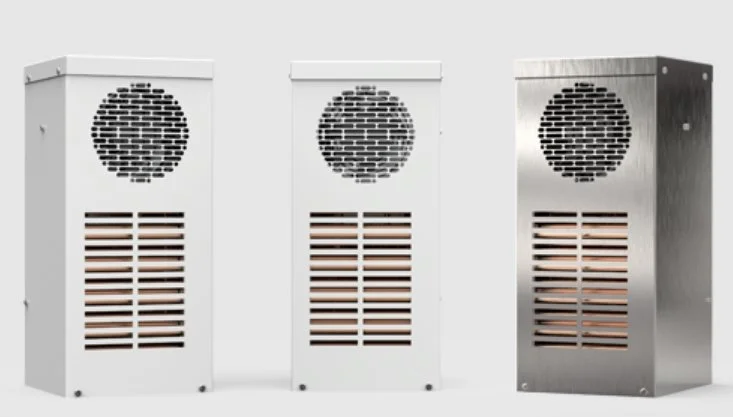
Dust and airborne debris
Moisture and humidity
Corrosive or caustic air
Washdown conditions
High ambient temperatures
Key Engineering Features
Pfannenberg highlights several design elements that make the DTS Series dependable and low‑maintenance:
Filterless, wide‑fin condenser - The wide fin spacing allows dirt and debris to pass through without clogging, eliminating the need for filters and reducing maintenance.
Backward‑curved impeller fans - These fans deliver strong airflow and long service life — Pfannenberg specifies lifetimes exceeding 55,000 hours.
Active condensate management - A built‑in PTC heater evaporates condensate automatically, removing the need for a drain line.
NEMA 4/4X stainless steel options - Ideal for food & beverage, washdown, and corrosive environments. Units include epoxy‑coated copper tubing for added protection.
High‑temperature models - Select DTS units are rated for ambient temperatures up to 140°F (60°C), making them suitable for areas near ovens, furnaces, or heat‑intensive processes.
Tool‑free mounting system - Pfannenberg’s patented mounting design allows fast installation and easy service access.
Cooling Capacities for Every Application
The DTS Series spans a wide range of cooling capacities, allowing users to match the right unit to the size and heat load of their enclosure. Pfannenberg’s lineup includes:
Compact units starting around 900 BTU/h
Mid‑range models in the 2,000–5,000 BTU/h range
High‑capacity units delivering 10,000–13,000 BTU/h
Large, high‑heat models approaching 29,000 BTU/h (nearly 2 tons of cooling)
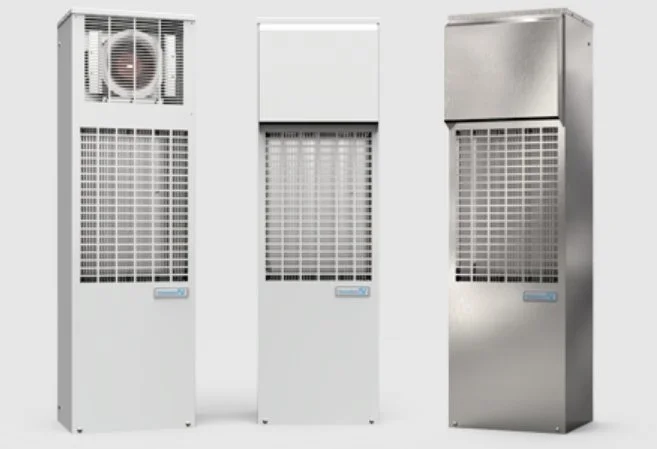
Across the series, Pfannenberg uses a long internal air path to pull hot air from the top of the enclosure and return cool, dry air to the bottom — a design choice they highlight as essential for protecting critical components.
Where the DTS Series Excels
Pfannenberg specifically positions the DTS Series for:
Manufacturing and industrial automation
Food & beverage processing
Outdoor electrical cabinets
Pump panels and drive enclosures
High‑dust or high‑heat environments
Corrosive or chemical‑laden air
The combination of closed‑loop cooling, filterless operation, and rugged construction makes the DTS Series a strong fit for facilities that need long‑term reliability with minimal maintenance.
Why WD Engineering Recommends Pfannenberg
As the local factory representative, WD Engineering supports customers who need dependable thermal management solutions. The DTS Series aligns with what our region’s OEMs, integrators, and end users require:
Reduced downtime through reliable closed‑loop cooling
Lower maintenance costs with filterless condensers
Fast installation using tool‑free mounting
Long service life from industrial‑grade components
Models for every environment, from NEMA 12 to NEMA 4X stainless steel
Whether you’re replacing aging cooling units or specifying equipment for a new build, Pfannenberg’s DTS Series delivers proven performance backed by a global leader in thermal management.
Need Help Selecting the Right Unit?
WD Engineering can help you size, select, and support the right DTS model for your application — from compact control panels to high‑heat drive enclosures. Contact us today to get started.