
Fast Fact Friday: Pfannenberg Invented the Original Filterfan® and It Still Sets the Standard Today

When it comes to enclosure cooling, the Pfannenberg Filterfan® is one of the most widely recognized solutions in the industry. What makes it unique is simple: Pfannenberg invented the original Filterfan® in 1958, and the company has continued improving the design ever since.
This Fast Fact Friday highlights what makes the Filterfan® such a reliable choice for keeping electrical enclosures cool.

A Pfannenberg Innovation Since 1958
Pfannenberg is the originator of the Filterfan®, first introduced in 1958.
Efficient Airflow for Enclosure Cooling
Pfannenberg Filterfans® are designed to move cool ambient air into an enclosure while pushing warm air out. Their design focuses on:
High airflow performance
Energy‑efficient operation
Reliable cooling for electrical components
Tool‑Free Filter Replacement
Pfannenberg emphasizes quick, tool‑free filter changes as a key benefit of the Filterfan® design. This makes maintenance faster and helps keep airflow strong over time.
Available in Multiple Protection Ratings
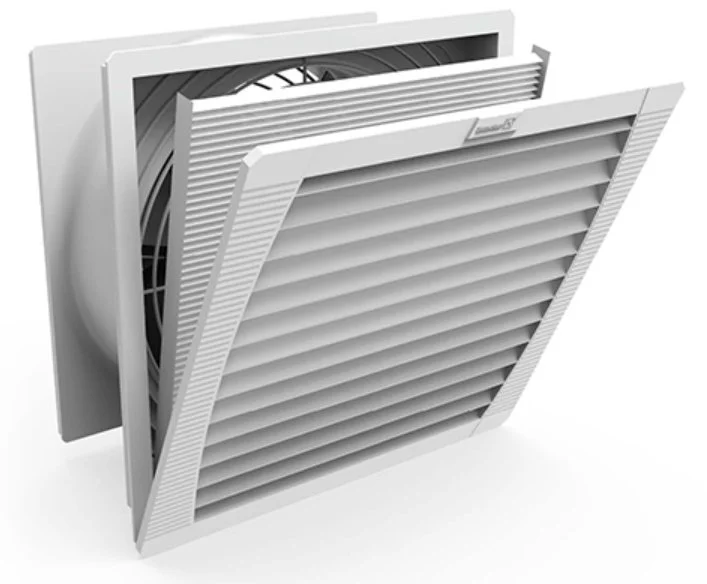
Pfannenberg Filterfans® are available in models that meet:
NEMA Type 12
NEMA Type 3R
NEMA Type 4/4X
These ratings ensure the right level of protection for different environments.
Built for Industrial Applications
A Pfannenberg Filterfan® is the perfect solution for:
Industrial machinery
Electrical panels
Food & beverage
Packaging equipment
Outdoor enclosures (depending on model)
Fast Fact Friday Takeaway
Pfannenberg didn’t just make a Filterfan® — they invented it. And more than 60 years later, it remains one of the most trusted and widely used solutions for keeping electrical enclosures cool and protected. WD Engineering Sales is proud to serve as the local manufacturer’s representative for Pfannenberg, supporting customers with product guidance, application expertise, and reliable thermal management solutions.
👉 Contact WD Engineering Sales to learn more or request support.